How construction websites can help secure quality clients
Why are construction websites important?
Most construction companies win work through tenders and referrals. They’re the backbone of the industry.
But the way construction buyers find and evaluate suppliers is shifting significantly. Buyers are researching online, comparing options, and deciding if your company makes their shortlist, long before they get in touch.
The design of your construction website is more important now than ever, as it's where buying decisions are being made.
Here are four things it should do to secure more quality clients.
1. Be specific about who you work with
Ever heard the phrase ‘appealing to everybody means appealing to nobody?’ This applies here.
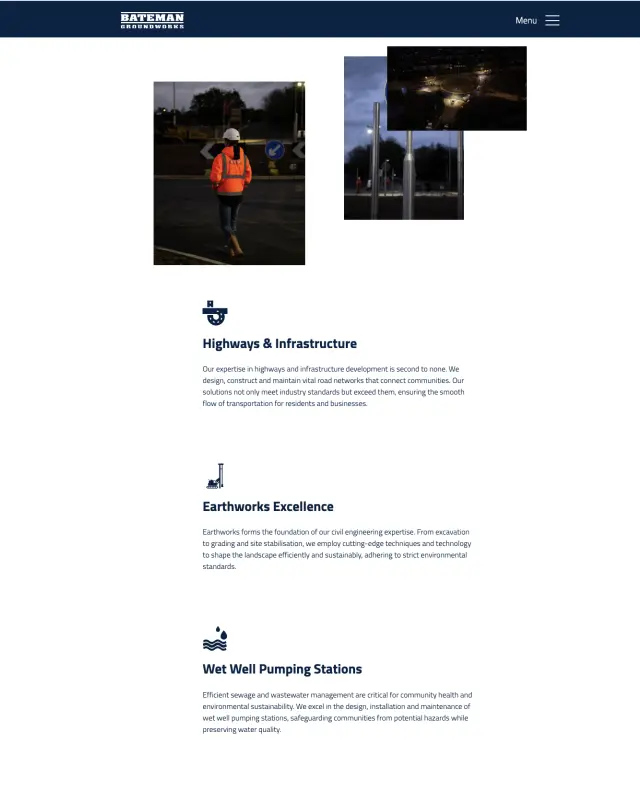
Buyers want to know quickly whether you work on projects like theirs. The sectors you specialise in, the scale you operate at, and the type of contracts you're looking for need to be clear from the moment someone lands on your site.
If you're trying to break into a new sector, or move up to larger contracts, your website is the best place to start.
Being specific has two main benefits:
- It helps the right buyers recognise themselves working with you
- It signals you understand their challenges, not just construction in general
2. Show up where buyers are searching
Online visibility is not separate from having a good construction website design. If you’re not being found, the design of your website doesn’t matter.
Buyers are searching in two places now. On search engines like Google, and increasingly through AI tools like ChatGPT and Gemini. Both are being used to find suppliers, compare options, and answer questions.
To show up in both, your content needs to address the questions your buyers are asking. Use detailed FAQs, clear service descriptions, and informative blog articles to do this.
Read more on how to write a SEO friendly article.
3. Make the next steps clear
Most construction companies don't prioritise conversion rate optimisation because they assume their site won't generate leads. But buyers who find you online are at a different stage of the buying process, and if your website doesn't make it easy for them to take the next step, they'll find a competitor who does.
Good B2B web design makes the next step obvious at every stage of the journey. Use an enquiry form on every service page, not just a contact page, and give buyers the confidence to fill it in.
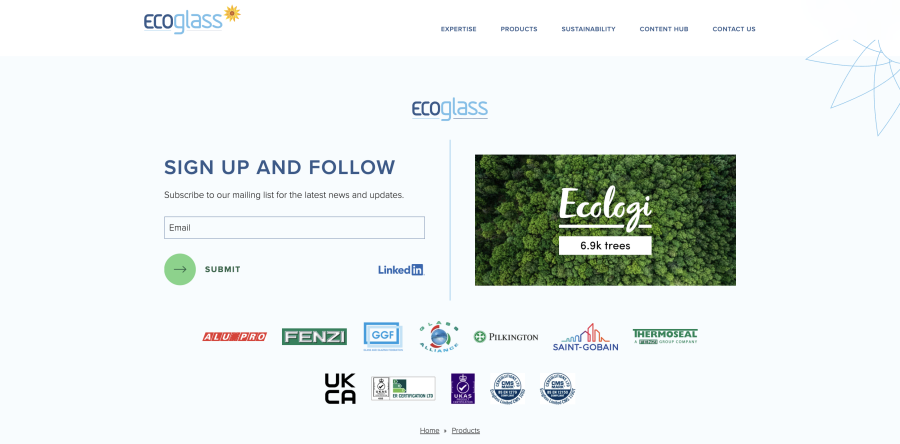
A conversion doesn't always have to be a contact submission. It can be any method of data capture that helps achieve your website goals. For example, Ecoglass have their mailing list subscription on every page.
4. Build your website for buyers who don't know you yet
Many construction websites read like a project portfolio. They show what has been built, where, and when. That works well for existing contacts. It doesn't work for a buyer who has never heard of you.
Your website should be a validation tool for buyers who know of you, and a trust building tool for those who don't.
Let them know how you handle their common problems or concerns, like tight schedules – what happens if there’s an issue in the supply chain? How can they be sure of your credentials, and present them to the boss? What happens if there are extra costs? They can’t afford to go above the budget.
You can address these in a tender submission, but they need to be on your construction website too.
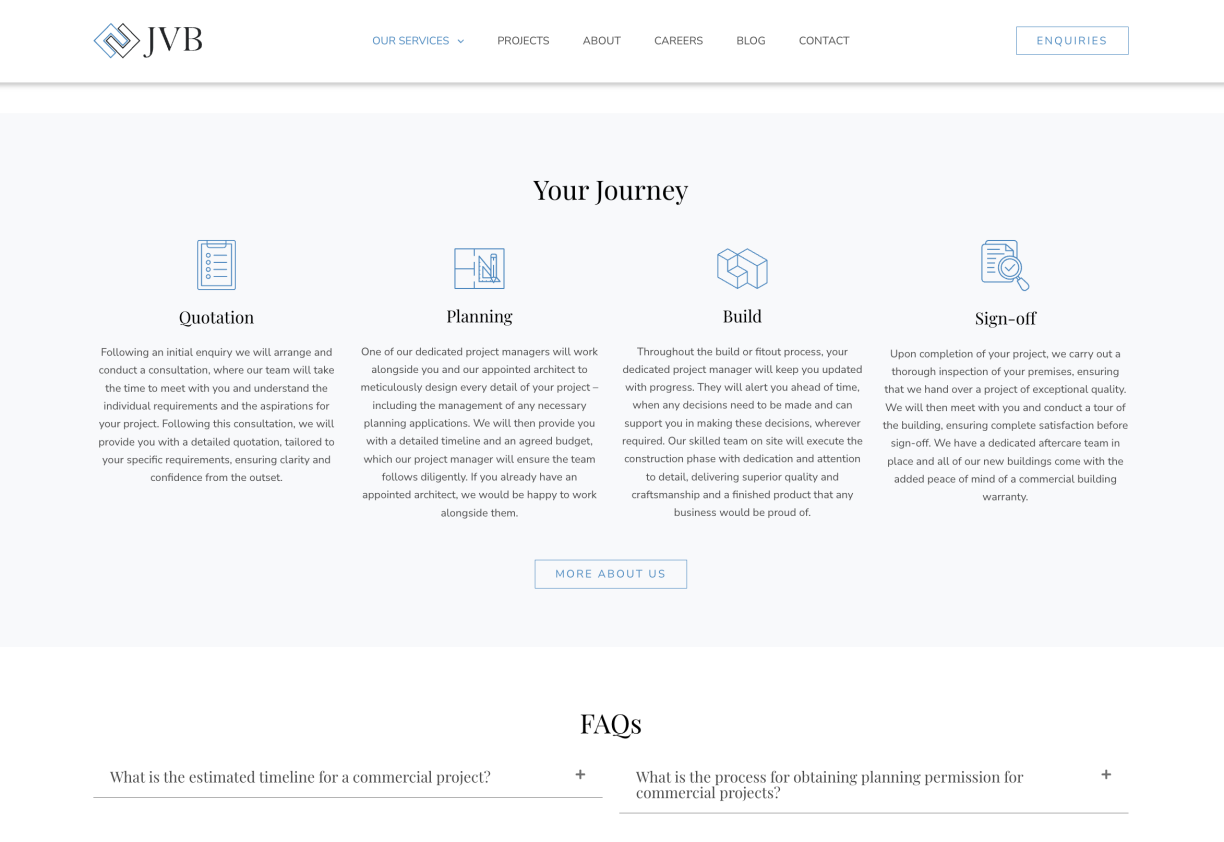
JVB clearly display their process and FAQs on their commercial services page so website visitors know what to expect.
Score your construction website
Tenders and referrals will always be part of how construction companies win work. But the buying process has changed, and your website needs to work hard, too.
Want to know if your website is performing well enough? Score it here. It takes 3 minutes and you’ll see where to improve.
This article was published on .

The Forkcast
The Forkcast

Ready
to get
started?
We can make your new website a great success.