Off-the-shelf software is great for getting a growing business off the ground, but over time, the same tools can limit how far your business scales. Here’s a guide to knowing when you’ve outgrown your current software, and how bespoke and off-the-shelf software compare.
Before we get into it, Colin Richardson, our Design Director, has a way for you to reflect on the processes running your business:
Aquicktest
‘If someone in the company left, was off long-term sick, or took a three-month holiday, would your processes hold up? Spreadsheets are often run by one person who knows them inside out, but they don't make sense to other people. Without staff portals, there's usually a go-to person who deals with it all, and they might be spending a lot of time on admin that you don't know about. If this is the case, it might be time to go custom.’
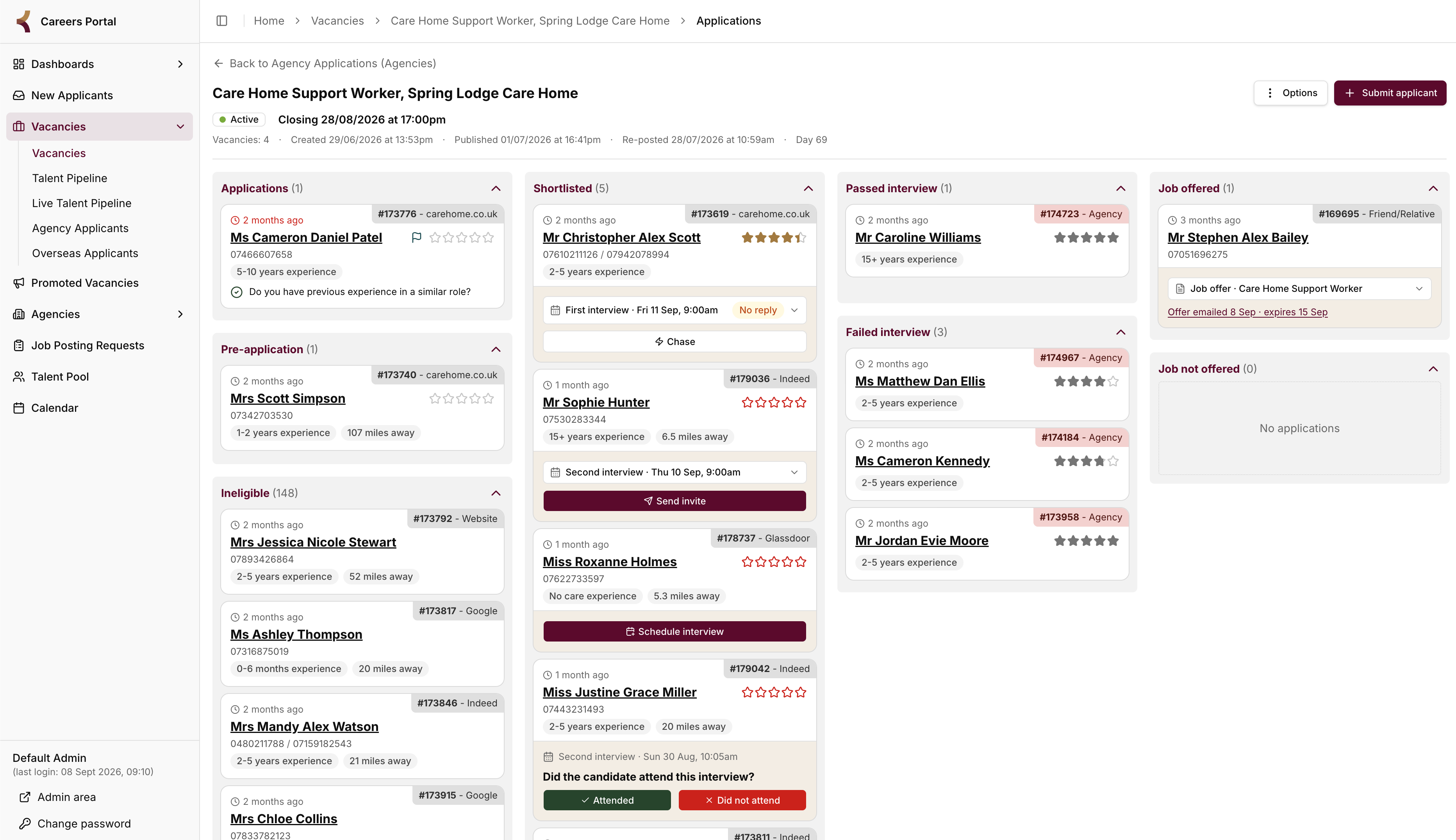
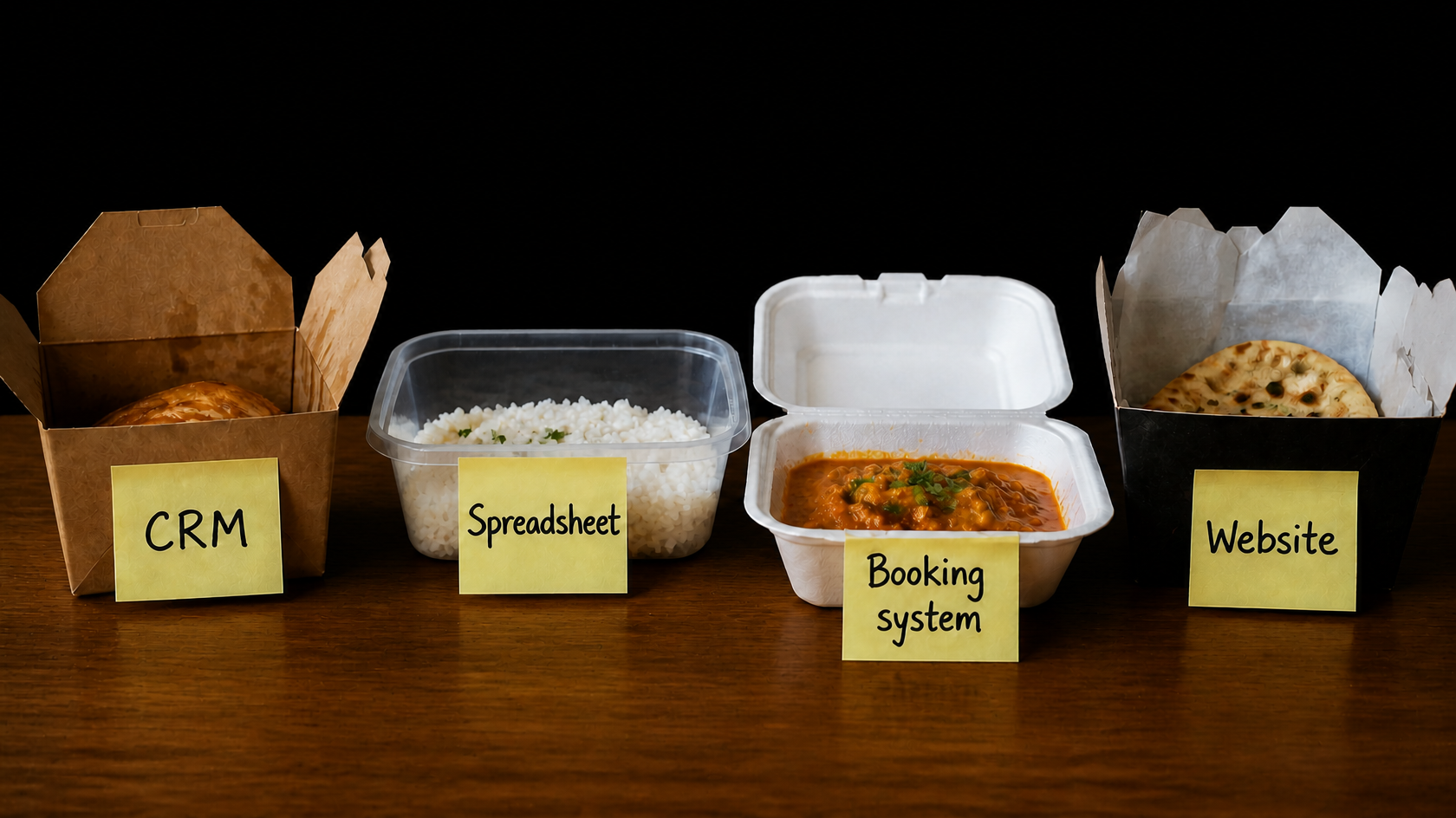
When your CRM, spreadsheets, booking system and website all hold different versions of the same information, your team might spend too much timeswitching between them. MuleSoft's 2026 Connectivity Benchmark Report, found only 33% of an organisation's applications connect to each other. A Harvard Business Review study found workers toggled between apps nearly 1,200 times a day, losing almost four hours a week to disconnected systems.
That’sa lot of time and energy!
A Bigfork example: The Association of Average Adjusters replaced a standalone Access database and a disconnected website with one custom CRM that manages memberships, subscriptions, exams and event bookings.
2:Manualerrorsarebeingmade
Mistakes happen, we’re human. But if they’re repeatedly appearing because there’s too many crossovers, or they’recausing problems with customers, you should think about getting a custom system built. Research by Professor Ray Panko found errors in 94% of real-world spreadsheets that were audited, so you’re not on your own. But you don’t want small mistakes to affect your business!
The more your processes rely on manual updates, the more those errors cost.
"We had a client who was running their business on software that sent and received full database installations between servers for every change. Every customer had an individual database, so had to wait for those changes to be synchronised before they could do anything else. It was, predictably, very slow and extremely error prone."
Loz Calver, Technical Lead
3:You'vegrownfastandyoursoftwarecan'tkeepup
Rapid growth exposes awkward workarounds. Processes that worked for a team of ten start to break with fifty, and per-user licence fees grow with every new hire. And the bigger the team and problem gets, the more complicated the fix might be down the line.
Bigfork example: our custom CRM for fintech company Inheritec processes 750+ claims a month, with only hosting costs to pay as their team and caseload grow.
4:You'reusingsoftwareforajobitwasn'tdesignedtodo.
When no tool quite fits, teams make do with what they have. Shared drives become intranets and spreadsheets become databases. It works for a while, but every workaround adds manual steps and makes processes harder to follow.
Bigfork example:
Before working with us, Kingsley Healthcare received job applications by email and through third-party systems, then entered them by hand into software designed for project management, not job applicants.
"Now applications from a variety of systems all arrive in one centralised Applicant Tracking System, where they're then fed through a bespoke screening, interview and onboarding process."
Loz Calver, Technical Lead
5:You'replanningtogrowfastagain
If you expect to double your customers, staff or locations, anytime soon, ask whether your current tools can handle it. Bespoke software is built around your processes and can be developed as you grow.
Bigfork example:Book the Bay now let's over 3,800 residents self-register 10,000+ vehicles across 288 locations, saving hundreds of hours of admin.
Bespokevsoff-the-shelfsoftware
Off-the-shelf software is like a set menu. It's quick and good value, but everyone gets the same dishes. Bespoke software is cooked to order, built around how your business works, which is why it costs more upfront.
Off-the-shelf software
Bespoke software
Starting point
Finding a ready-made product to sign up to
Research into your processes, business, users and goals
How it works with your processes
You change the way you work according to the software set up
Built around how your business already works
Integrations
Limited to set / compatible integrations
Connects to systems you choose
Room for growth
Can be scaled, but often costly and may have limits
Can be developed over time to add users or functionality
Upfront costs
Lower, depends on packages and seat numbers
From £15k - £50k at Bigfork. Around £15k for a simple portal
Ongoing costs
Monthly or yearly license fees, often per user
Hosting and maintenance from £200 a month at Bigfork
Timescale
Normally ready immediately or after a sign-up / demo call.
4-6 months for bigger projects
Best for
Standard processes (accountancy, tax) or businesses still shaping how they work like a start-up
Businesses with specific processes, several systems or plans to grow fast
Whenyoushouldstickwithoff-the-shelfsoftware
Bespoke software isn't always the answer. Stick with off-the-shelf when:
A reasonably priced tool already does the job, and you have the capacity to set it up or can pay a specialist to do it.
Your process or offer is still changing.
The process is standard. Accounting and payroll work much the same everywhere, and the big tools handle compliance updates for you.
A connection of your current systems would solve your problem. Linking two tools costs far less than building one!
You need it next week. Off-the-shelf tools are ready straight away.
‘If what they need already exists as SaaS, and they have the capacity to onboard and support it internally or pay a specialist, then sometimes that might be viable and more cost-effective. Most of the clients we work with have very specific processes or requirements, and existing SaaS products would at best be a compromise or at worst totally unsuitable.’
Colin Richardson, Design Director
Doyouneedtogobespoke?
If you recognise these signs, it might be worth having a taste.

 "We had a client who was running their business on software that sent and received full database installations between servers for every change. Every customer had an individual database, so had to wait for those changes to be synchronised before they could do anything else. It was, predictably, very slow and extremely error prone."