
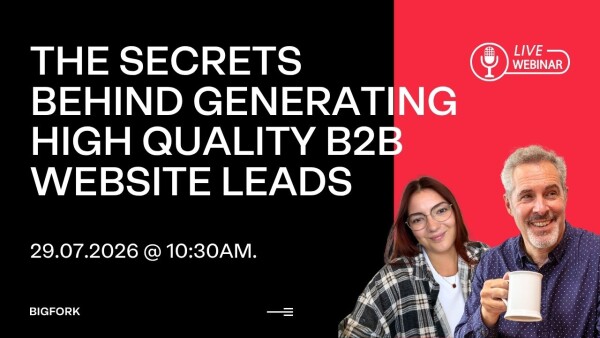
Webinar: The secrets behind generating high quality B2B website leads
B2B lead gen is getting harder. But why?
Buyer behaviour has shifted. Buyers are researching much more online before they ever reach out, which means your website is doing a lot more of the heavy lifting than it used to.
This is a problem if your B2B website isn't build for lead generation.
On top of that, the leads that do come through aren't what you want. Spam, time-wasters, and scammers who are getting a lot smarter. If you've clicked on a new enquiry with excitement only to realise it's completely worthless, you'll know how demoralising that is.
More traffic is not the solution. It's about converting more of that existing traffic into leads.
Questions answered in this webinar
- Why is my B2B website generating the wrong kind of leads?
- Where should I put my proof content so it's most impactful?
- How do I write better CTAs?
- What information should I put on my contact page?
- What's the difference between a generic CTA and an intent-based one?
- Does gated content harm B2B conversions?
- What type of content is worth gating?
- How short should my contact form be?
- How do I test my changes?
Key Takeaways
Proof content next to your CTAs increases conversions.
B2B buyers are risk averse. Adding the right proof content, client logos, outcomes, testimonials, right next to your CTA catches visitors at the exact moment they're deciding whether to click. Research from the CXL Institute shows this tactic alone can increase conversions by 32%.
Talking to who you serve best improves lead quality.
HubSpot research shows 50% of B2B leads are a waste of time. Telling visitors exactly who you work with best, right next to your form, attracts the right prospects and deters the ones you don't want. Be specific. "We help fintechs get more enterprise customers" will always outperform "we work with leading businesses."
Intent-based CTAs outperform generic ones by over 200%.
"Contact Us" is not a good converting CTA. Replacing it with intent-based CTAs that match what the customer is looking for reduces friction and increases conversions.
Sell the meeting, not just the click.
Vague "Book a demo" CTAs without supporting content don't perform. Tell visitors who they'll speak to, how long it'll take, and what they'll walk away with. Remove the worry that it's just a sales pitch.
This article was published on .

The Forkcast
The Forkcast

Ready
to get
started?
We can make your new website a great success.