Custom software developmenthas a reputation for being expensive. This guide uses previous projects our team has built to explain what drives the cost, the ongoing costs to budget for, and when bespoke software ends up cheaper than off-the-shelf.
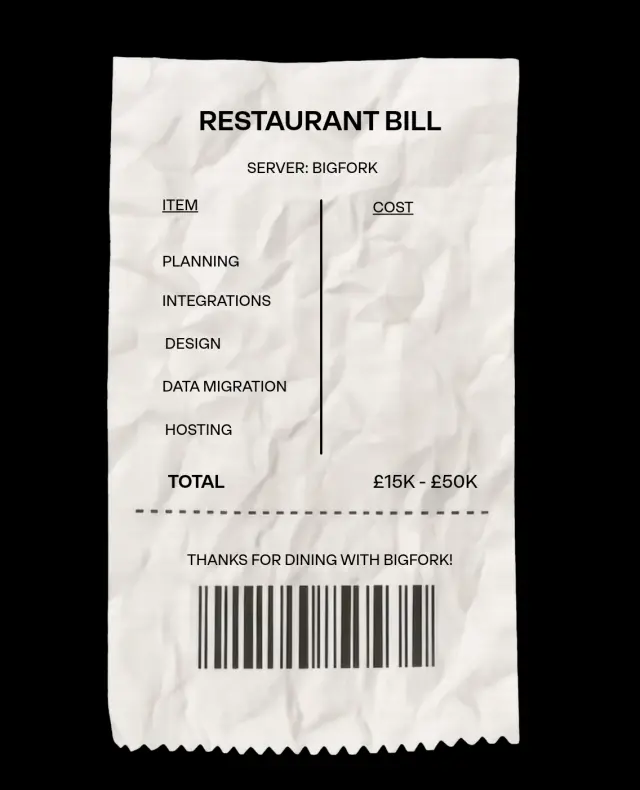
Most bespoke software projects at Bigfork cost £15,000 to £50,000. A simple standalone staff portal can start from around £15,000, and a bespoke CRM usually costs £20,000 upwards.
The number and complexity of integrations with other systems is usually the biggest driver of cost.
Hosting and maintenance starts from £200 a month for a smaller project, plus a few days a year for ongoing development.
Bespoke software has no per-user licence fees, so costs don't rise every time your team grows.
Launching essential features first, and connecting existing tools where possible, keeps costs down.
Thepriceofcustomsoftware
Most bespoke software projects at Bigfork cost between £15,000 and £50,000. Where yours lands depends on what the software needs to do and how many other systems it connects to.
Simple standalone staff portal: from around £15,000. A focused system for one job, ike giving staff one place to find documents and policies.
Bespoke CRM: usually £20,000 upwards. CRMs manage more data, more users and workflows, and are often connected to other systems.
Larger systems with several integrations: towards the top of the range, around £50,000.
Whatmakesbespokesoftwaremoreexpensive?
Most of the cost of bespoke software comes from planning. Before anything is built, the agency needs to understand how your business works, where your current processes break down and what the system needs to do.
From there, the more ingredients you add, the higher the price is. Things that contribute to the cost are:
Integrations:connecting to other systems is often where costs grow. For example, our Inheritance Data customer portal integrates with the National Wills Register, Argus Vickers and Equifax.
Features and workflows:every feature, user type and process adds build and testing time.
Your existing data: moving data from spreadsheets or an old database takes planning and migration time, especially if it's messy.
Users and security:different permission levels, logins and data protection all need building in.
Design and usability: software your team enjoys using gets adopted faster, so it’s worth the investment.
‘The number and complexity of integrations with other systems is usually the biggest driver of cost. However, even software with no external integrations can still be hugely complex. A lot of the planning for these systems goes into figuring out all the ways things could go wrong and how to handle that, not just what happens when things go right.’
Loz Calver, Technical Lead
Theongoingcostsofcustomsoftware
Like a website, custom software needs hosting, security updates and support once it's live. At Bigfork, hosting and maintenance for a smaller project starts from £200 a month, and larger projects with more requirements can cost more. It's also worth budgeting a few days a year for ongoing development, as your needs change.
Off-the-shelf software looks cheaper at the start, but license fees usually rise with every new user and you pay them every year. With bespoke software, you pay to build it once, then you own it. For example:
Inheritec: our custom CRM processes 750+ claims a month, with a flat platform cost (no per seat license costs or increases).
Pay 4 Bay: our cashless payment system handles 8000+ parking payments a month across 50+ locations and has already paid for itself many times over.
Sometimes the savings come from time, rather than license fees, like Kingsley Healthcare.
‘Before working with us, Kingsley Healthcare received job applications by email and through third-party systems, then entered them by hand into software designed for project management.
Now applications from a variety of systems all arrive in one centralised Applicant Tracking System, where they're then fed through a bespoke screening, interview and onboarding process.’
Loz Calver, Technical Lead
Howtocutdownthecostofcustomsoftware
Start with your biggest problem. Maybe it's a manual workaround that takes too long and leads to errors. Or your current setup might be confusing for your customers. Launch the essential features first, then add more once your team is using it.
Be clear on what you need. A proper discovery phase stops costly changes halfway through the build.
Connect systems before you rebuild. Sometimes linking your existing tools solves your problem first.
Involve decision makers early. Late changes from stakeholders are one of the most common reasons budgets grow.
Howlongdoescustomsoftwaretaketobuild?
Timescales depend on scope. Yes, that seems like a bland answer but it's true.
We built Omar Group's staff portal in three weeks, but most projects take 4-6 months to build including discovery, where realistic timescales and milestones will be set.
The biggest part of any timescale is planning, but it's worth it.
The development and maintenance isn't the big part, it's the planning, and that's what we're really good at. Understanding the business, and how we can take their existing processes and make them work as a system that's easy to use.
Colin Richardson, Design Director
Iscustomsoftwaredevelopmentworthit?
It is when your current software is holding your business back!


 The development and maintenance isn't the big part, it's the planning, and that's what we're really good at. Understanding the business, and how we can take their existing processes and make them work as a system that's easy to use.