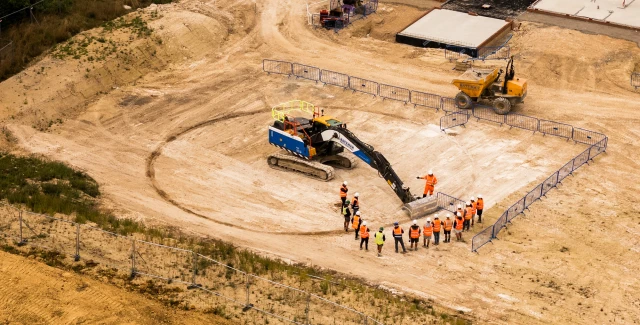
6 must-haves for construction company websites

- Table of contents
- 1. Case studies that prove quality
- 2. Benefit led service descriptions
- 3. Client testimonials and social proof
- 4. Certifications, accreditations and compliance
- 5. Effective calls to action and contact options
- 6. Differentiation and a professional design
- Making construction websites work harder
A well-designed website helps construction companies establish
credibility, build trust, and ultimately drive sales.
A successful construction website does three things: gets found in search engine results, makes it easy for users to find information, and converts visitors into leads.
In this article, we'll explore what construction companies need on their websites, from content that builds trust, to conversion optimisation.
1. Case studies that prove quality
Quality is key in construction, but most companies don’t back up their claims.
Construction buyers want concrete proof: timelines, budgets, challenges overcome, and measurable outcomes.
In fact, research on LinkedIn shows that B2B companies who use case studies see a 70% increase in leads.
The best construction websites include case studies covering different project types and sectors to showcase their range of expertise, and help potential clients see examples that match their own needs

2. Benefit led service descriptions
Each service page should focus on benefits to clearly explain what the service is, who it's for, and what problems it solves.
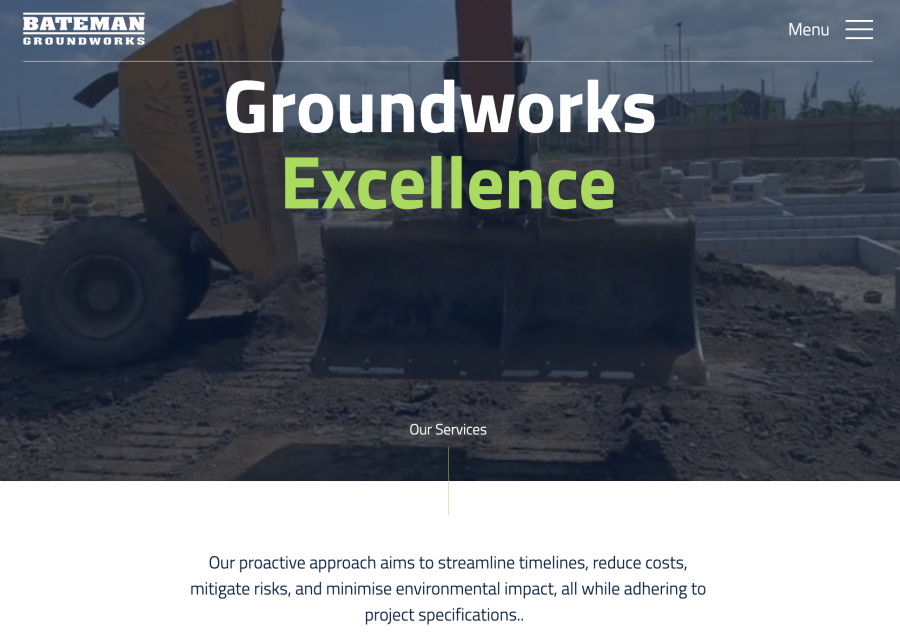
For example, Bateman Groundworks state their service "aims to streamline timelines, reduce costs, mitigate risks, and minimise environmental impact, all while adhering to project specifications," telling clients exactly what they’ll get.
Construction websites that focus on customer benefits are more likely to generate more quality enquiries.
3. Client testimonials and social proof
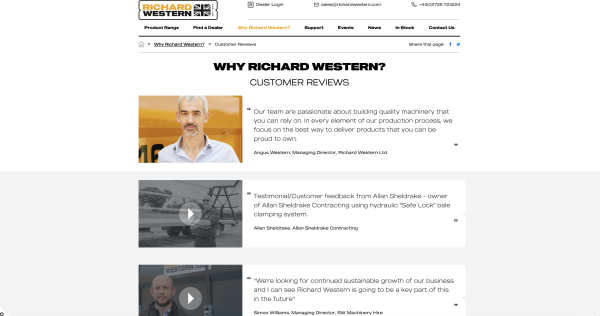
A potential client landing on a construction company website is asking themselves: "Can I trust this company?" Testimonials and social proof answer that question.
Around 92% of B2B buyers read online reviews and testimonials to make purchasing decisions. Having real feedback featured on a B2B website is far more valuable to users because they come from clients who've experienced the service first-hand.
Highlighting recognisable existing client logos, years in business, number of projects completed, and client retention rates provide further proof of reliability and track record.
4. Certifications, accreditations and compliance
Compliance and safety are non-negotiable in construction, so websites must make it immediately obvious that the business meets all necessary standards.
Many construction companies have the right certifications but hide them in PDFs or at the bottom of an "About Us" page.
Instead, they should be highlighted on the homepage and main service pages to build credibility, reliability and trust.
5. Effective calls to action and contact options
To generate leads from a construction website, it must be optimised for conversions.
Construction companies can improve their website conversions by:
- Using clear and direct calls to action that stand out on the page.
- Having simple contact forms that appear frequently throughout the website.
- Offering multiple ways of getting in contact (phone, form, email etc).
- Ensuring effortless website navigation.
- Including content that builds trust and credibility.
- Using A/B testing on optimised pages.

6. Differentiation and a professional design
Most construction company websites look identical and say the same things. Without differentiation, customers have no reason to choose one company over another.
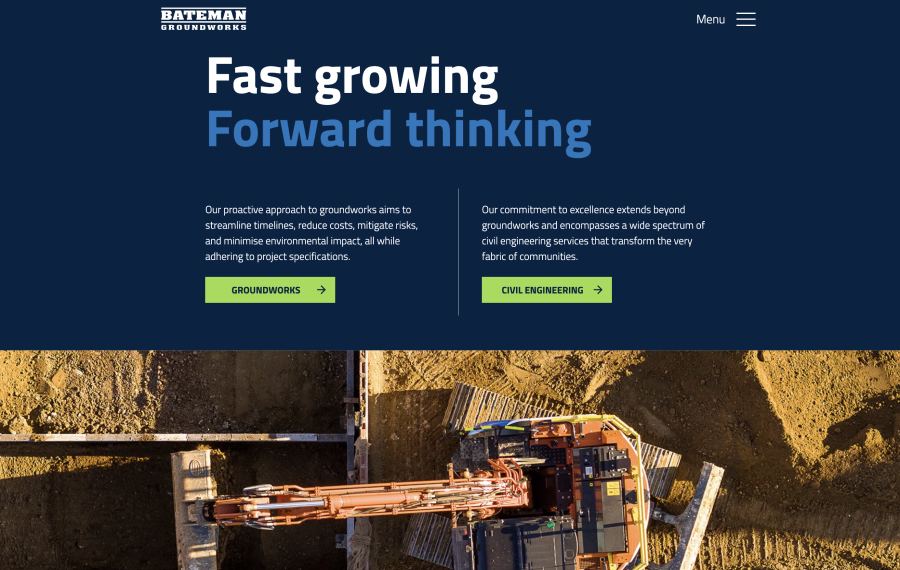
To effectively differentiate, construction companies need a clear value proposition on their site that states what they do, and why they do it well.
Beyond messaging, the design of a website says as much about a construction company as the work itself.
High quality imagery, organised information, and consistent branding all demonstrate a professional and reputable company.
Making construction websites work harder
With 73% of B2B buyers now preferring to buy online, a construction company's website is its most important marketing asset. It needs to be actively generating leads and winning business.
Most construction companies have the expertise; their websites just don't communicate it clearly. The ones that differentiate and showcase their strengths generate more enquiries and better-quality leads.
Need help building a construction website that generates quality leads?
This article was published on , filed under website content, lead generation, website design.
The Forkcast
Not your average B2B newsletter. Spice up your inbox with The Forkcast.

Ready
to get
started?
We can make your new website a great success.