
What are the most common B2B website optimisation issues?
Most B2B companies treat their website as a one-off project with an end date. But the best websites should always be evolving and improving.
This is where website optimisation comes in.
It's the ongoing work of making your existing website perform better to bring in more traffic, generate more leads, see better ROI and ultimately, grow your company.
If you’re not optimising your website properly, you’ll be giving customers away to your competitors.
B2B buyers now spend 83% of their journey researching independently, which means your website needs to convince them to add you to their shortlist.
This article explains the most common issues we see when it comes to website optimisation.
Not tracking performance properly
A lot of clients think they're tracking their website performance accurately. But often, this isn’t the case.
Key events like form submissions, downloads, newsletter sign-ups and calls often aren’t set up correctly so the number of conversions is inaccurate.
Only tracking traffic numbers seems like a good indicator of performance, but it only shows half the picture. It won't tell you how users interact with your site, what your conversion rate is, or what return you're getting from it.
If this is the case, you cannot track which changes work, and which ones don’t. And, you don't know the overall performance of your site. The B2B website average conversion rate is 2.2%. Does yours sit above or below that?
Google Analytics, heatmaps and SEO tools should be set up properly so you can see how every change impacts your website performance. Then you know where to focus your efforts.
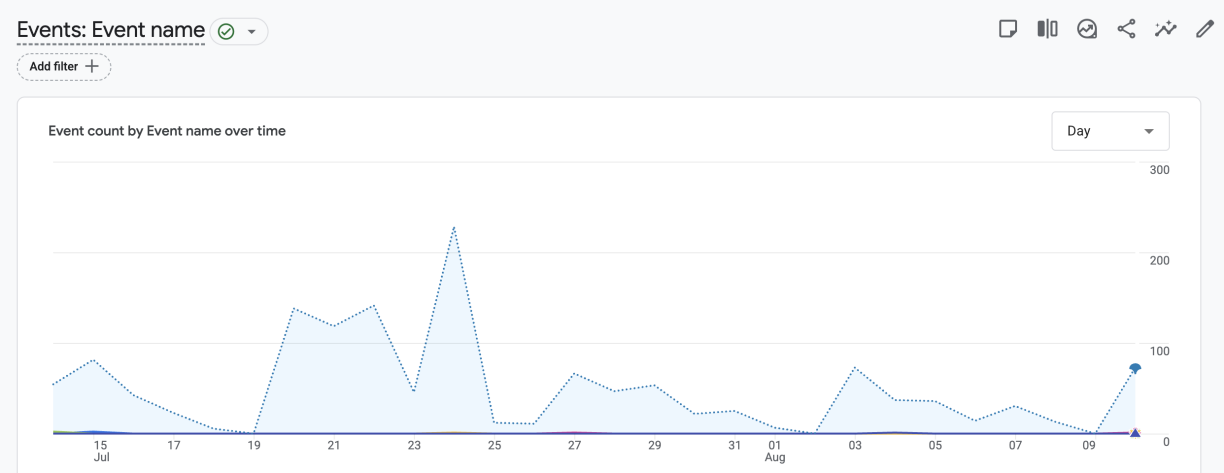
Tracking events on GA4 paints a picture of user engagement and conversions
Making too many changes at once
It’s tempting to change the copy, redesign the page and rewrite your calls to action in one go.
But similarly, to above, if you make too many changes at once, you can’t tell which improvement worked, and which didn’t.
Imagine you make 10 changes to your homepage at the same time. Then you start getting more leads in. That’s great, but can you tell which changes helped increase conversions so you can copy it onto your other pages?
Change one thing at a time, and give it around a month to prove itself, depending on your traffic levels.
If you've got enough visitors, you can A/B test instead. It's slower, but every change teaches you something you can use again.
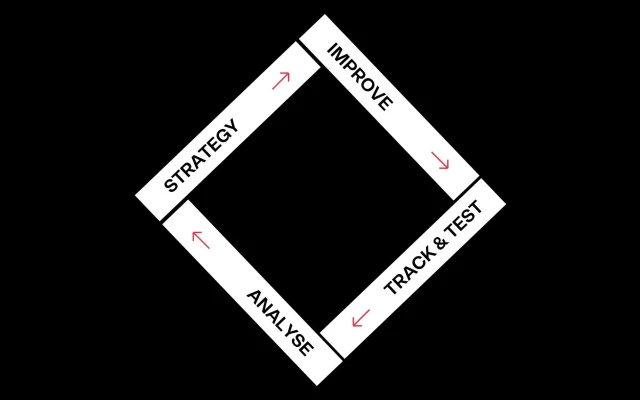
Treating optimisation as a one-off project
Optimisation isn’t the same as a one-off redesign project.
Instead, it should be used as an ongoing, medium to long-term strategy to get quality website leads.
B2B buyer behaviour can change. Your competitors might be improving their search rankings and appearing above you. Or your company may have a slightly different offering.
If you’re not regularly improving your website, it will fall behind and struggle to achieve the goals you set for it.
You'll typically start seeing real improvement around three months into ongoing optimisation. SEO is a long-term tactic, but there are usually short-term wins and small improvements you can see along the way.
Review your website every month. Look at the data and make deliberate improvements to stay competitive.
Not connecting optimisation to leads and ROI
It’s easy to make a website look good, but that doesn’t mean it works. Website optimisation should be focused on generating leads, increasing revenue and improving ROI.
If none of your changes are aimed at getting visitors to enquire, you won't get more customers. Focus on clear calls to action, fewer form fields, simpler user journeys and content that speaks to your buyer's problem.
Because leads, revenue and ROI are the metrics that show your website is growing the company, and how you prove the value of the site to the board.

To finish up
A website is one of the most important B2B marketing assets.
The companies getting the most leads from their website are testing, measuring and refining it, month after month.
Every change to your site should make it tastier.
(A bit like adding layers to a cake.)
Not sure where you should start optimising your B2B website?
Answer some questions to find where you are on our tasty scale. Then it'll tell you where you need to improve.
This article was published on .

The Forkcast
The Forkcast

Ready
to get
started?
We can make your new website a great success.